My Blood Others Life
Give blood. Give hope. Give life.
Voluntary blood donation is one of the most powerful acts of service a healthy adult can perform. Atala Raktadan Abhiyan connects you with patients in real emergencies — and honours every donation with a digital certificate and lifetime history.
Eligibility
Who can donate blood in India?
National blood transfusion guidelines and WHO recommendations form the basis of our eligibility criteria. Final approval always rests with the medical officer at the donation site, who conducts a pre-donation health screening.
- Age: 18 to 65 years (first-time donors up to 60; regular donors may continue until 65 with medical clearance)
- Weight: Minimum 45 kg (50 kg preferred for apheresis platelet donation)
- Haemoglobin: Minimum 12.5 g/dL for women; 13.0 g/dL for men
- General health: Free from fever, cold, or active infection on donation day
- Pulse & BP: Pulse 60–100 bpm; blood pressure within normal range
- Identity: Valid government-issued photo ID (Aadhaar, PAN, driving licence, or passport)
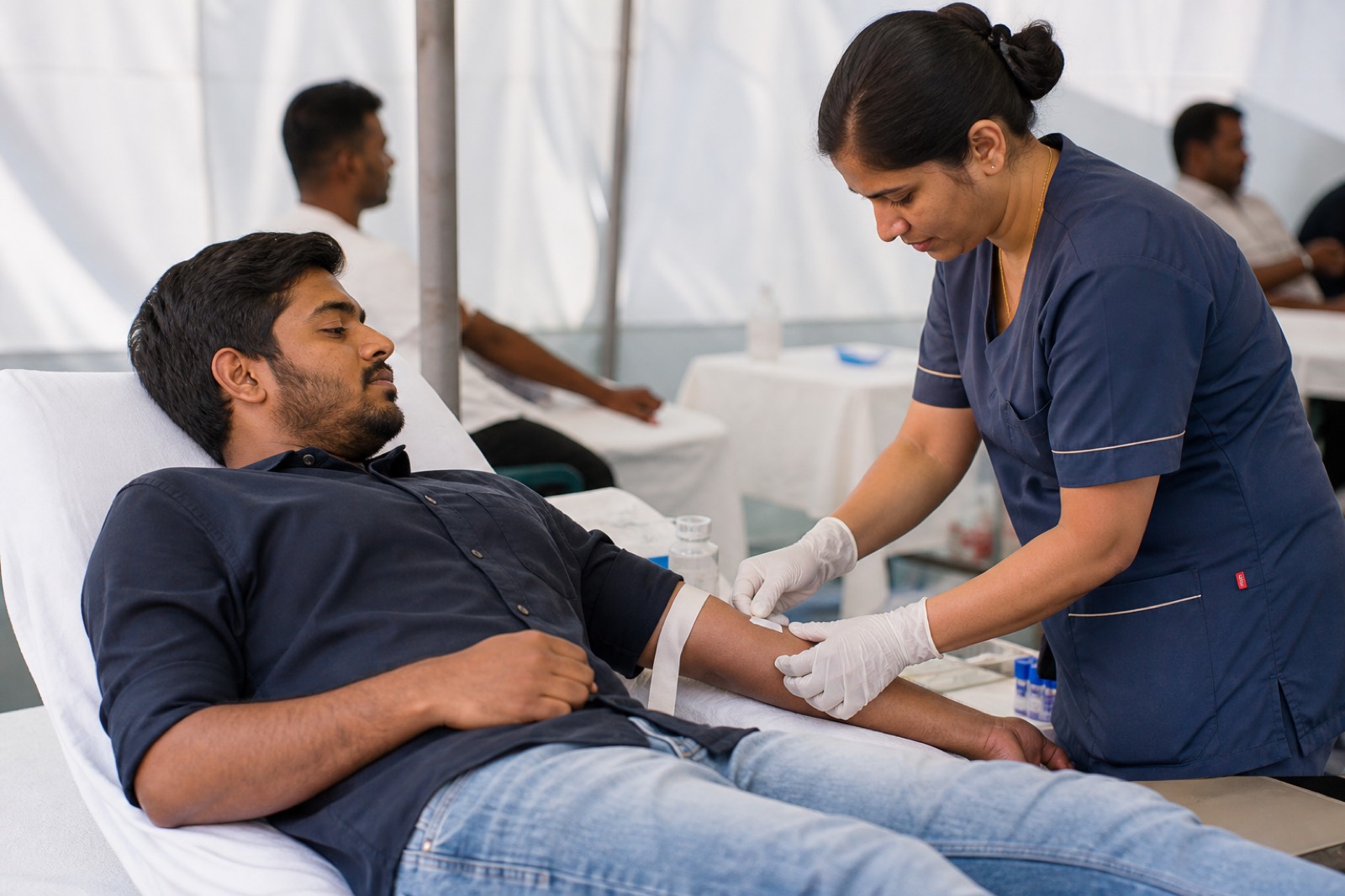
Health Requirements
Temporary and permanent deferrals
Certain conditions require waiting before you can donate, while others permanently exclude donation. Transparency protects both donors and recipients.
You should wait if you have…
- Donated whole blood within the last 3 months
- Received a tattoo or body piercing in the last 6 months
- Had major surgery within the last 6–12 months
- Taken antibiotics for an active infection (wait 7–14 days after completion)
- Travelled to a malaria-endemic region (deferral period applies)
- Been vaccinated with a live vaccine in the last 4 weeks
- Consumed alcohol within 24 hours of donation
Permanent deferral applies for…
- HIV, Hepatitis B, or Hepatitis C infection
- History of intravenous drug use
- Certain blood disorders (e.g. haemophilia as a recipient need, not donor)
- Active cancer treatment (survivors may donate after clearance — consult your doctor)
- Insulin-dependent diabetes with complications
- Heart disease, epilepsy, or severe asthma uncontrolled by medication
If you are unsure about your eligibility, register in the app and consult the medical officer at your nearest camp. Many conditions that seem disqualifying are actually acceptable after a waiting period.
Benefits
Why voluntary donors keep coming back
- Save up to three lives — one whole blood donation can be separated into red cells, platelets, and plasma for different patients
- Free health screening — haemoglobin, blood pressure, pulse, and weight checked at every donation
- Stimulates blood cell renewal — your body replaces donated blood within 24–48 hours; new cells form within weeks
- Reduces iron overload — regular donation may lower excess iron stores linked to certain health risks
- Emotional fulfilment — donors consistently report deep satisfaction from knowing they helped a stranger survive
- Digital recognition — certificates, badges, and donation history through the Atala Raktadan Abhiyan app
- Community belonging — join 1,25,000+ registered donors across Odisha in a movement inspired by Atal Bihari Vajpayee
Preparation
Before and after your donation
24 hours before donation
- Drink 8–10 glasses of water throughout the day
- Eat a balanced meal — avoid fasting or heavy fatty foods
- Get 7–8 hours of sleep the night before
- Avoid alcohol and smoking
- Bring a valid photo ID and your app registration details
- Wear comfortable clothing with sleeves that roll up easily
After donation — rest and recover
- Rest for 10–15 minutes at the camp; eat the light snack provided
- Drink extra fluids for the next 24–48 hours
- Avoid heavy lifting or strenuous exercise for 24 hours
- Keep the bandage on for 4–6 hours; if bleeding occurs, apply pressure and raise your arm
- Do not drive immediately if you feel lightheaded — sit down and inform camp staff
- Report any unusual symptoms (fever, persistent dizziness) to the blood bank or call our helpline
Donation Intervals
How often can you donate?
Your body needs time to replenish blood components. Following recommended intervals keeps you healthy and ensures the quality of every unit collected.
| Donation Type | Volume Collected | Minimum Interval | Annual Maximum |
|---|---|---|---|
| Whole Blood | 350 ml (women) / 450 ml (men) | 3 months (90 days) | 4 times per year |
| Platelets (Apheresis) | Single or double unit | 72 hours (same type) | 24 times per year |
| Plasma (Apheresis) | 500–650 ml | 4 weeks (28 days) | 12 times per year |
| Double Red Cells | 2 units of red cells | 4 months (112 days) | 3 times per year |
Blood Groups
Every type is needed — some more urgently
O-negative is the universal donor for red cells; AB-positive is the universal recipient. All groups save lives — register yours in the app for accurate emergency matching.
O-negative and B-negative donors are especially valuable during emergencies because of limited supply and broad compatibility. If you belong to a rare group, your registration could be the difference between life and death for a patient tonight.
Myths vs Facts
Common misconceptions — cleared with science
Myth: Donating blood makes you weak
Fact: Your body replaces the fluid volume within hours and regenerates red blood cells within 4–6 weeks. Most donors resume normal activities the same day after a brief rest period.
Myth: You can contract diseases from donating
Fact: All equipment is sterile, single-use, and disposed of after each donor. There is zero risk of infection from the donation process itself.
Myth: Vegetarians cannot donate
Fact: Diet does not disqualify you. Vegetarians and vegans can donate if haemoglobin levels meet the minimum threshold — iron-rich foods help maintain eligibility.
Myth: You need to know the patient personally
Fact: Voluntary anonymous donation is the safest and most ethical model. You donate to the community blood supply — your blood may save someone you will never meet.
Myth: People with diabetes cannot donate
Fact: Well-controlled Type 2 diabetes without complications is generally acceptable. Insulin-dependent diabetics should consult the camp medical officer.
Myth: Blood donation is painful
Fact: The needle prick lasts a second. Most donors describe the experience as a mild pinch followed by 8–12 minutes of comfortable rest. Camp staff are trained to minimise discomfort.
FAQs
Questions from first-time donors
Plan for 45–60 minutes including registration, health screening, the donation itself (8–12 minutes), and a 10-minute recovery period with refreshments. Apheresis platelet donations may take 60–90 minutes.
Many common medications — including blood pressure tablets, thyroid medication, and oral contraceptives — do not prevent donation. The medical officer will review your medications during screening. When in doubt, bring a list of your prescriptions to the camp.
Ensure your donor status is set to “Available” and notifications are enabled. When a matching request arrives, review the hospital location and urgency, then tap Accept if you are willing and eligible. Contact details are shared immediately for coordination.
Yes. Once the donation is confirmed in the app — either through a camp scan or request fulfilment — a digital certificate is generated automatically with your name, blood group, date, and a unique verification ID.
Yes, provided haemoglobin levels are above 12.5 g/dL and you feel well. If you experience heavy bleeding or fatigue, it is wise to wait until your next cycle. The pre-donation haemoglobin test will confirm eligibility on the day.
My Blood Others Life
Your next donation could save three lives today.
Register in the app, find a camp near you, or stay ready for emergency alerts — every path begins with one decision to give.